
Why Anxious Dogs Run: Understanding Flight Behavior and Preventing Escapes
- Jun 30, 2025
- 6 min read
Updated: Jul 7, 2025
Each July, National Lost Pet Prevention Month brings a sharp reminder that anxiety in dogs isn’t just emotional — it can be a physical risk. When a dog flees out the door, pulls the leash from your hand, or disappears through a barely noticeable gap in the fence, it’s not just misbehavior. It can be a fear response wired deep in the brain. Understanding the why behind flight behavior, especially in anxious dogs, can help prevent heart-wrenching escapes and move your relationship toward safety, not surveillance.
Why Dogs Flee
Flight Behavior Isn’t a Choice — It’s a Survival Reflex
When a dog bolts, it’s not because they’re trying to escape you. It’s because their nervous system perceives a threat, real or imagined, and takes over. This is part of the “fight-or-flight” response governed by the autonomic nervous system, specifically through the amygdala, the brain's threat detector.
For an anxious dog, that switch flips faster and more often. Sudden noises, new environments, or changes in routine can send them into automatic survival mode.
Why Anxiety Makes Dogs More Likely to Flee
In anxious dogs, the brain is always scanning. It filters the world through a lens of “what might go wrong?” This is known as attentional bias toward threat: anxious individuals are more likely to notice and fixate on anything that feels unsafe.

And once their focus locks in, many dogs struggle to look away. This difficulty disengaging from stress is a key predictor of flight risk. For some, it shows up as bolting through doors. For others, it’s darting across a yard after a sudden sound. Either way, the anxious brain says: move first, assess later.
The Problem with Avoiding Triggers
It’s natural to want to help your dog by steering clear of things that scare them. But constant avoidance may actually intensify their anxiety over time. Studies show that avoidant behavior can strengthen a dog’s focus on threat cues and reduce their capacity to regulate movement under pressure.
In other words, trying not to scare your dog can inadvertently make them more scared because they never learn how to navigate fear safely.
Impulse Control Isn’t Obedience — It’s Neurology
Impulse control isn’t about “listening better.” It’s about whether a dog’s brain is biologically ready to pause, process, and respond thoughtfully under pressure. Especially for anxious or trauma-affected dogs, that pause can be hard — or even impossible — without support. At the heart of this process is what researchers call a “state of flux.” It’s a moment between stimulus and response when a dog might shift from automatic reactivity to intentional behavior. That pause is rare in severely anxious dogs, but it can be developed with the right approach.
Several key neurobiological forces shape a dog’s ability to access that pause:
Glucose availability: Glucose fuels the prefrontal cortex, which is the part of the brain responsible for reflection, decision-making, and regulation. In anxious or traumatized dogs, glucose is often diverted to the limbic system (the emotional brain) to manage perceived threats. That means there’s less energy available for impulse control, especially during stress. A dog who bolts or snaps isn’t misbehaving — they may simply lack the metabolic fuel to make a different choice.
Dopamine signaling: Dopamine isn’t just about pleasure — it’s about possibility. It shapes learning, curiosity, and the ability to shift attention. When dopamine is dysregulated, dogs may struggle to explore options or respond to rewards. In this state, they’re more likely to repeat what feels familiar, even if it’s unsafe or impulsive. Building healthy dopamine responses through attuned interaction is key to growing impulse control over time.
Relational safety and co-regulation: Dogs learn to regulate themselves by first being regulated with someone. This is co-regulation — where a calm, responsive caregiver helps a dysregulated dog return to safety. Without this relational feedback loop, dogs can stay locked in fight, flight, or freeze modes. Co-regulation is the gateway to self-regulation.
What Is HLCPM?
The Human-Led Canine Paralanguage Method (HLCPM) is a communication model built around the way dogs naturally interpret the world — through non-verbal, sensory cues like body posture, facial expression, vocal tone, and movement. Rather than relying on obedience cues or verbal commands, HLCPM helps dog parents create a shared emotional language with their dogs. It’s less about “getting your dog to do something” and more about being someone your dog can regulate with.
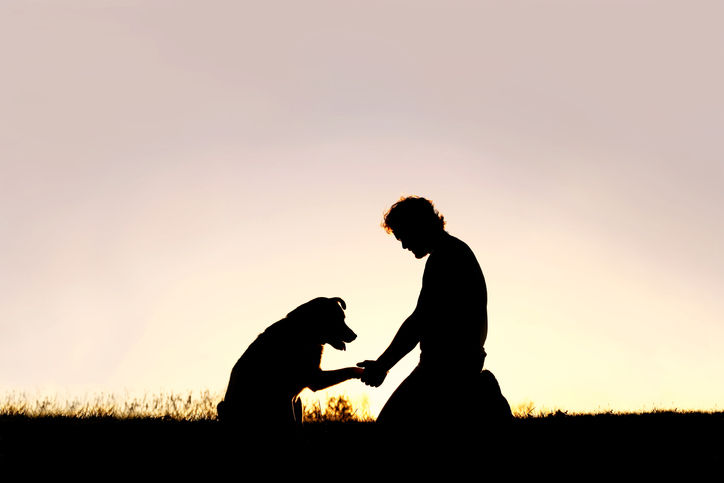
Here’s what HLCPM looks like in practice:
Posture and body movement: Dogs read your body position long before they notice your words. In HLCPM, you use relaxed shoulders, slow movements, and angled positioning to communicate calm and safety. Approaching sideways instead of head-on, or even standing still and breathing deeply, can reduce arousal.
Facial expression and eye contact: Soft eyes, a relaxed jaw, and neutral brows signal safety. HLCPM teaches dog parents how to mirror emotional calmness with subtle facial shifts, which dogs instinctively understand as “everything’s okay.”
Vocal tone and rhythm: It’s not what you say — it’s how you say it. A low, even, rhythmical tone (think soft hums, murmurs, or elongated cues) helps regulate your dog’s nervous system far more than sharp or repetitive commands. HLCPM emphasizes vocal modulation to match the dog’s stress level and help bring them back into balance.
Structured rituals: Rituals like consistent leash-up routines, transition cues (“ready,” “pause,” “go ahead”), and patterned greetings offer predictability. These cues become anchors, reducing uncertainty and helping dogs settle into the moment.
Together, these components form a sensory-based toolkit that speaks to the dog’s nervous system directly, bypassing the need for complex verbal processing, especially in moments of high stress. HLCPM isn’t about training obedience — it’s about building a relational framework where dogs can feel safe enough to choose calm. Over time, this practice doesn’t just prevent runaway behavior. It supports emotional repair.
Preventing Flight: Practical Tools That Actually Help
Routines Create Safety
Predictability lowers stress. Use consistent door routines, walking patterns, and daily rhythms to reduce your dog’s need to anticipate danger. Simple changes like announcing transitions with a cue (“Ready?”) or repeating specific steps during leash-ups can ground anxious dogs in familiarity.
Use the Pause: Co-Regulate in the “State of Flux”
The state of flux is a brief window where a dog hesitates before reacting. You might see a freeze, a held breath, or a momentary look back. In that instant, you have the opportunity to step in — not with pressure, but with presence. Using HLCPM, respond with a calm body, gentle tone, or even stillness. That’s not you controlling your dog — it’s you helping them access their own control.

Teach What to Do, Not Just What to Stop
Instead of “no” or “leave it,” offer a clear, rewarding alternative: “Something better.” This approach encourages the dog’s brain to shift attention, not suppress impulse. When the reward is co-regulation, not just a treat, you’re building impulse control from the inside out.
Understand That Avoidance Isn’t Enough
Avoiding every possible trigger isn’t sustainable. What helps instead is creating opportunities for safe exposure — under threshold, with support, and with your dog’s consent. We’re not asking the dog to “be brave.” We’re saying, “You don’t have to face this alone.”
Take Action for Safety, Not Fear
National Lost Pet Prevention Month isn’t just about ID tags and microchips (though those are essential). It’s about addressing the roots of why dogs run.
Start here:
Secure all gear, including backup leashes and harnesses for flight-prone dogs.
Practice exiting and entering doors calmly, with attention to your dog’s body language.
Teach every caregiver in your household what your dog’s flight cues look like.
Watch for that pause, and meet it with patience, not pressure.
Not Just Safer. More Connected.
Flight behavior isn’t a character flaw. It’s the nervous system doing its job under stress. But with the right tools, it doesn’t have to be the only option. Helping an anxious dog learn to stay and not flee starts with how we show up. Calm. Predictable. Tuned in.
Your dog doesn’t need to be perfect. They just need to know you see them.
And that they’re not alone.
Sources
Wikipedia contributors. (n.d.). Fight-or-flight response. Wikipedia. Retrieved June 29, 2025, from https://en.wikipedia.org/wiki/Fight-or-flight_response
Sakemoto, N., & Tanaka, H. (2024). Fight, not flight! Avoidant behavior strengthens attentional shift toward threat stimuli during anxiety. Tokyo University of Agriculture and Technology. https://doi.org/10.21203/rs.3.rs-3123023/v2
Smith, S. (2024, October 22). Impulse control in canine behaviour – Beyond fight, flight, or freeze & the missing ‘state of flux’. OSF. https://doi.org/10.17605/OSF.IO/ZASMK


Comments